How a Forest Girl Fell in Love with the Winter Sea
 Pavla Borg

How winter swimming helped me rediscover Malta
I am a forest girl.
I come from South Bohemia in the Czech Republic, a landlocked country covered in forests and sometimes described as the green heart (or the green roof) of Europe. My body understands trees, moss, woodland paths, mushrooms and streams.
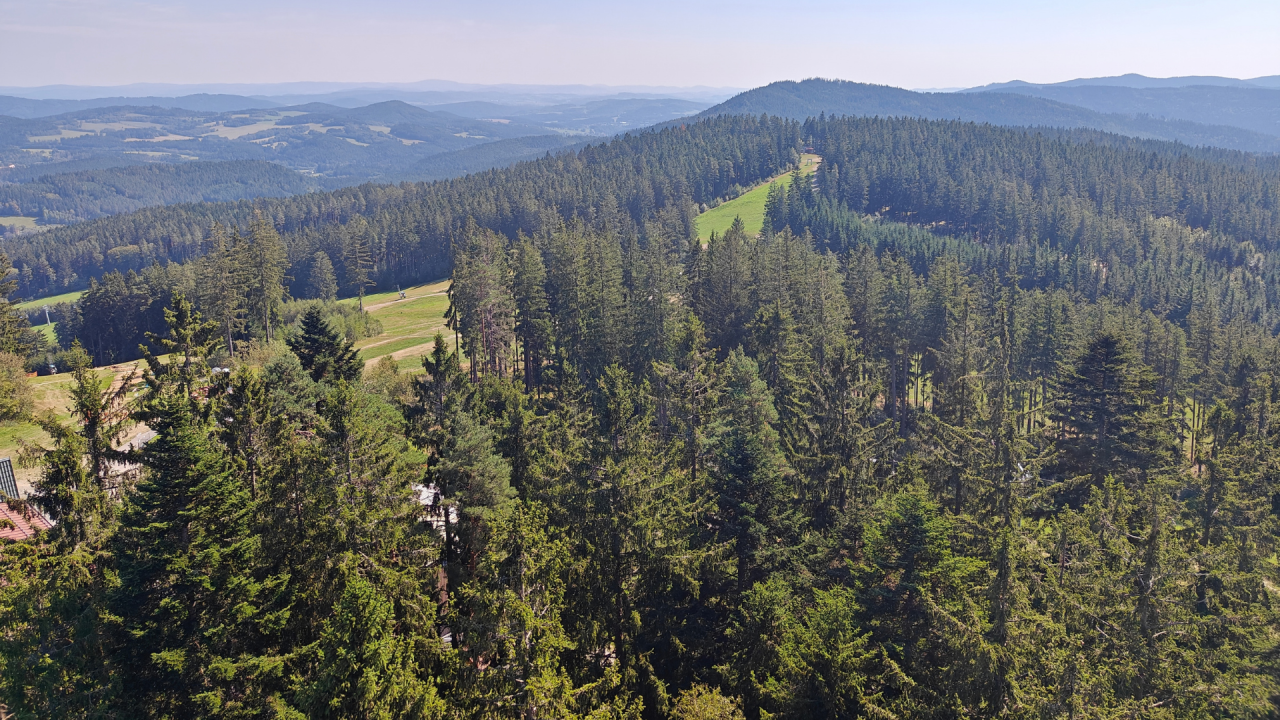
The sea is not my natural habitat. I did not grow up swimming in it and I am certainly not one of those elegant swimmers who glide effortlessly towards the horizon. I manage a comfortable breaststroke. That is about as impressive as it gets :)
Then, in January 2024, I set myself a winter swimming challenge as part of my annual January Cold Shower Challenge. In the 5th edition I wanted to shake things up a bit and inspire other people, and perhaps myself too, to stop focusing on the forests Malta doesn't have and appreciate the incredible sea we have all around us. It ended up being one of the best months of my life here and it completely changed my relationship with Malta.
By then I had lived here for 26 years and my relationship with the island had been a rather bumpy ride. Malta had become home but I missed the forests and changing seasons of the country I came from. Perhaps because I was still so often mistaken for a tourist, I never really felt that I belonged.
Then I discovered Malta in winter.
This was not postcard Malta with packed beaches, umbrellas, boats and nowhere to park. Once the summer crowds had gone, a different island appeared. I found quiet places, changing skies, crystal-clear water and deserted beaches. I began watching the weather, noticing the wind and learning the different moods of the sea.
Do you think Malta is overpopulated? Do you feel as though there is nowhere quiet left and nature has disappeared beneath the buildings?
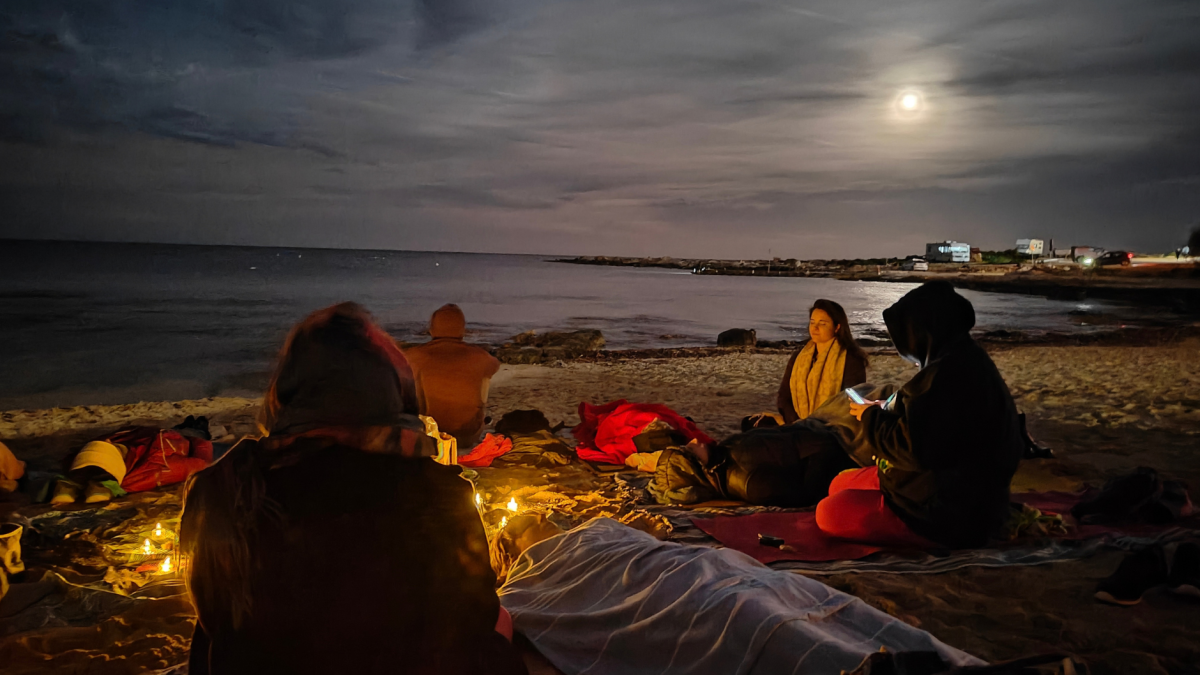
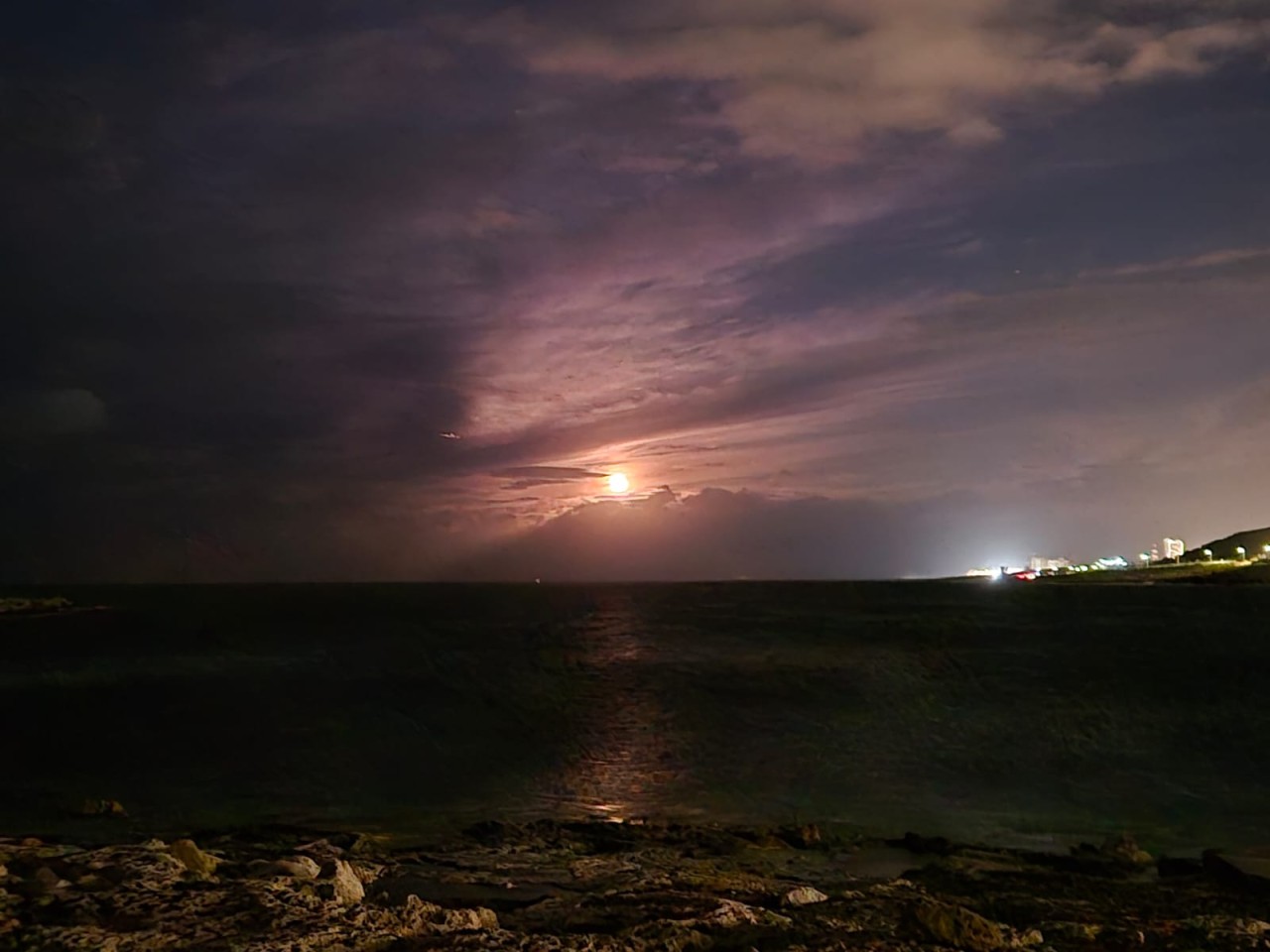
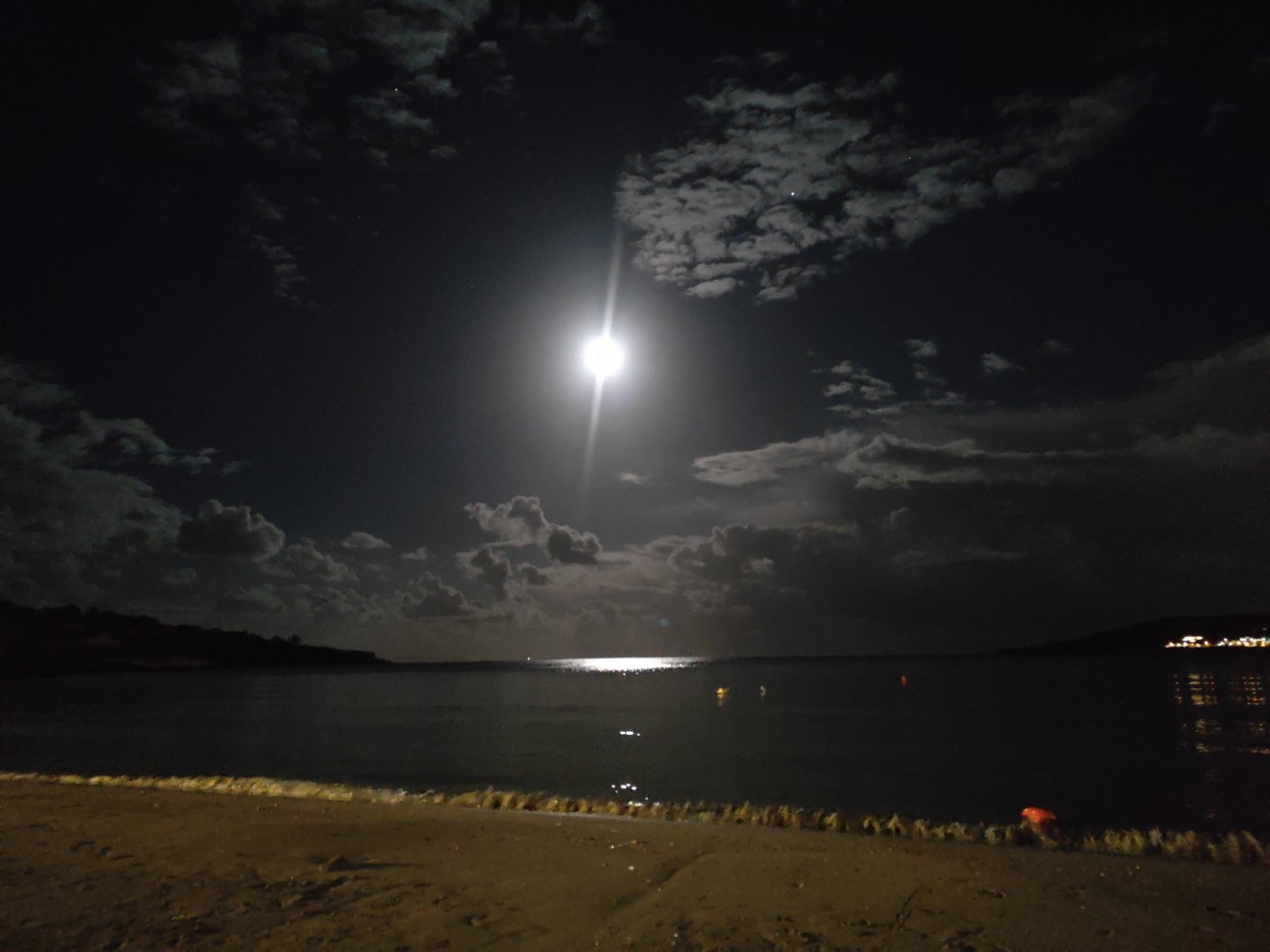
Come to the beach in winter after the moon has risen. You may be amazed.
The road behind you becomes quiet, the limestone buildings fade into the darkness and the sea opens in front of you beneath the moon. Suddenly, our crowded little rock feels spacious again. Pinky swear!
That discovery eventually grew into my regular winter Full Moon Nature Immersions. I wanted other people to experience the Malta I had found: not only the island we rush around during the day but the island that reappears when the noise settles and most people have gone home.
It is possible to live on an island and lose touch with the sea
We see the Mediterranean constantly but that does not necessarily mean we have a relationship with it. It can become part of the scenery: something we drive past, photograph or visit in summer when we need to cool down.
Winter changes that relationship. The sea is no longer simply somewhere to escape the heat. The water is cooler, the conditions less predictable and there is a moment of resistance when we have to remove our warm clothes and walk towards the sea. It asks us to pay attention.
Why the full moon?
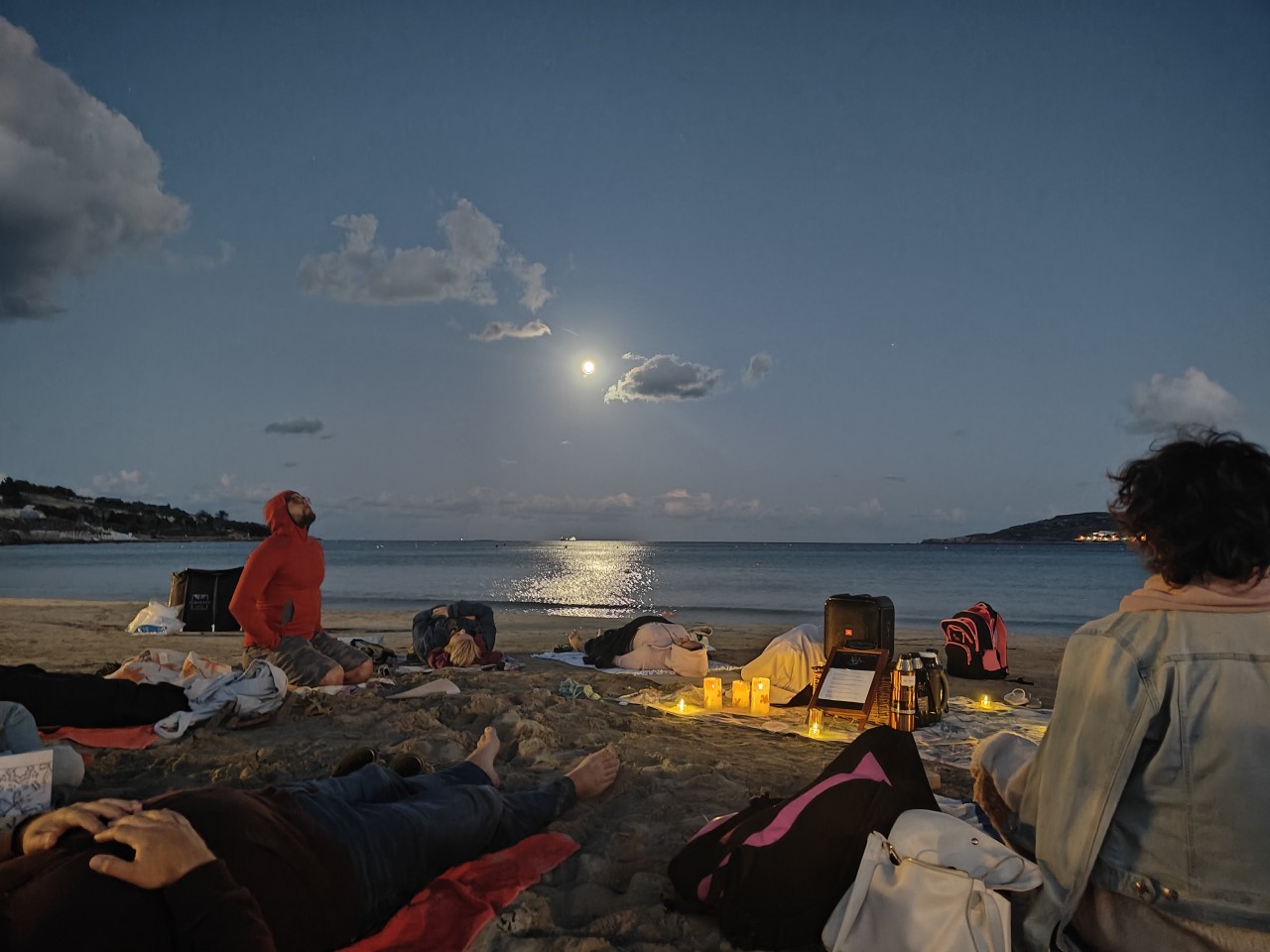
The Full Moon Nature Immersions are my way of bringing people out of their ordinary surroundings and into direct contact with the nature available to us here. At night even a familiar bay feels different. We slow down, listen more carefully and notice the air, the waves and the temperature on our skin. There is also something rather lovely about arranging to meet according to the moon instead of only according to Outlook or Google Calendar.
We begin to change before we enter the water
There is a reason we often feel different as soon as we arrive at the sea, before we have swum or even taken off our shoes. Much of modern life happens close up, between buildings, cars and screens. At the shore our eyes travel into the distance and the waves hold our attention without requiring us to solve anything. We are engaged without being bombarded.
I sometimes think we make wellbeing unnecessarily complicated. We try to schedule exercise, breathing, mindfulness, time in nature, digital detox and social connection as separate activities, then become stressed because we cannot fit all our stress-management practices into the week.
The sea brings many of them together. We navigate rock or sand in the darkness, breathe outdoor air and listen to a natural rhythm. Swimming gets the whole body moving while cooler water provides a strong sensory stimulus. It wakes us up quickly and demands our attention in a way that few ordinary activities do.
Then there is the human part. We arrive together, laugh, hesitate and encourage one another. Everyone enters at their own pace and we often come out looking visibly brighter.
It is nature, movement, challenge, play and connection bundled into one surprisingly short experience. Try fitting all of that into an app.
The first conversation is with the breath
At the sea, the world becomes immediate again. Is the rock slippery? Where is the wind coming from? What are the waves doing? How does the water feel today and what happened to my breath when it reached my waist?
I love and teach breathwork but I do not believe every situation requires a special breathing technique. Before we try to change the breath, we can listen to what it is telling us.
As we approach cooler water, the breath may become hurried or shallow. We might hold it without realising. The shoulders rise, the jaw tightens and the body begins preparing before we have even entered.
This is useful information. The aim is not to perform calmness or control the body into submission but to stay in conversation with it.
Can I pause and feel my feet? Can I release some unnecessary tension? Can I allow the exhale to happen without forcing it? Can I enter gradually and remain able to respond?
This is one reason I find winter swimming so valuable: the feedback is immediate and honest. It is difficult to pretend that you are relaxed when your entire body is telling you otherwise but you can learn to meet that activation differently.
That learning does not stay in the sea.
A few minutes can be enough
Malta’s winter sea is relatively forgiving. At its coldest it is usually around 16°C, not an ice bath and certainly not the extreme water found in northern countries. This makes winter swimming more accessible here and yet the water is cool enough to create a very clear shift. You do not need specialist equipment, a free weekend or an elaborate wellness routine. You do not even need to be a brilliant swimmer. I am living proof of that.
A few carefully judged minutes can be enough.
During our Full Moon Nature Immersions, we practise safely, enter together, remain close to shore and come out before the cold begins to take more than it gives. There is no prize for staying longest.
This is not about becoming tougher
Cold exposure can easily become another competition. How cold was it? How long did you stay? Did you put your shoulders under? Did you manage without making a face?
I understand the temptation. Challenge can be exciting and discovering that we are capable of more than we expected can be powerful. But resilience is not the ability to ignore every signal from the body.
For me resilience is the ability to meet a challenge, remain connected to yourself, make a good decision and recover afterwards. Sometimes courage means entering the water and sometimes it means coming out. On another day it may mean standing at the edge, feeling the pressure to join in and deciding that today is not the day.
The sea is a good teacher because it does not flatter us. It changes constantly and asks us to respond to what is actually there, rather than to the conditions we hoped to find.
Each time we do this well, we gather a little evidence:
I can feel discomfort without panicking.
I can stay present while my body is activated.
I can make a decision and trust it.
I can adapt.
That is how confidence grows... not by shouting affirmations at ourselves but by gathering evidence.
My work follows a progression of Restoration, Regulation and Resilience, although the sea does not present them as three tidy stages. Restoration may begin while we are still standing on the shore, looking towards the moon and listening to the water. Regulation happens as we notice the breath, enter gradually and allow the initial response to settle. Resilience develops through returning in different conditions, recognising our limits, adapting and recovering.
Falling in love with winter on the rock
I still love forests and the Mediterranean will never be the landscape of my childhood. Living here has taught me however that belonging to a place is not always immediate. Sometimes we create belonging by paying attention. We return to the same shore in different weather, learn the moods of the water and become less afraid of winter.
Perhaps nature does not have to look like our first home to offer us another kind of home.
In January 2024, I thought I was beginning a swimming challenge. I did not know that I was about to rediscover the island on which I had already lived for 26 years.
I wish more people in Malta could experience that. It is one of the great gifts of living on the Rock and it is free. Not only for confident swimmers, athletes, cold enthusiasts or people who already own all the gear but people rather like me, who manage a comfortable breaststroke and are not trying to win anything.
This October 26th, the winter Full Moon Nature Immersions return and everyone is welcome.
Come out of the concrete for an evening and join us at the beach after the moon rises. Discover how quiet this supposedly overcrowded island can be. Watch the light moving across the water, notice what happens to your breath as you enter and stay for a few carefully judged minutes before coming out, dressing warmly and sharing the unmistakable brightness that seems to appear on people’s faces afterwards.
A winter swim will not solve your life but falling in love with the sea might change your life on the rock.
It changed mine.
Join us...
Categories: : Breathwork & Meditation, Cold exposure, Grounding, Malta
Enjoyed this? Stay curious with me.
Occasional thoughts on breathing, resilience, health, cold and the interesting things I discover along the way.
Plus first notice of workshops and community events.
