The Extraordinary in The Ordinary Cucumber
 Pavla Borg

What an edible water bottle in a green jacket taught us about hydration, curiosity and play
There may be no vegetable less exciting than a cucumber.
Which, of course, made me want to build an entire ice bath meetup around one.
It was July in Malta. And it was hot! Hydration seemed like a sensible theme and cucumber is almost entirely water.
So I may have got slightly carried away.
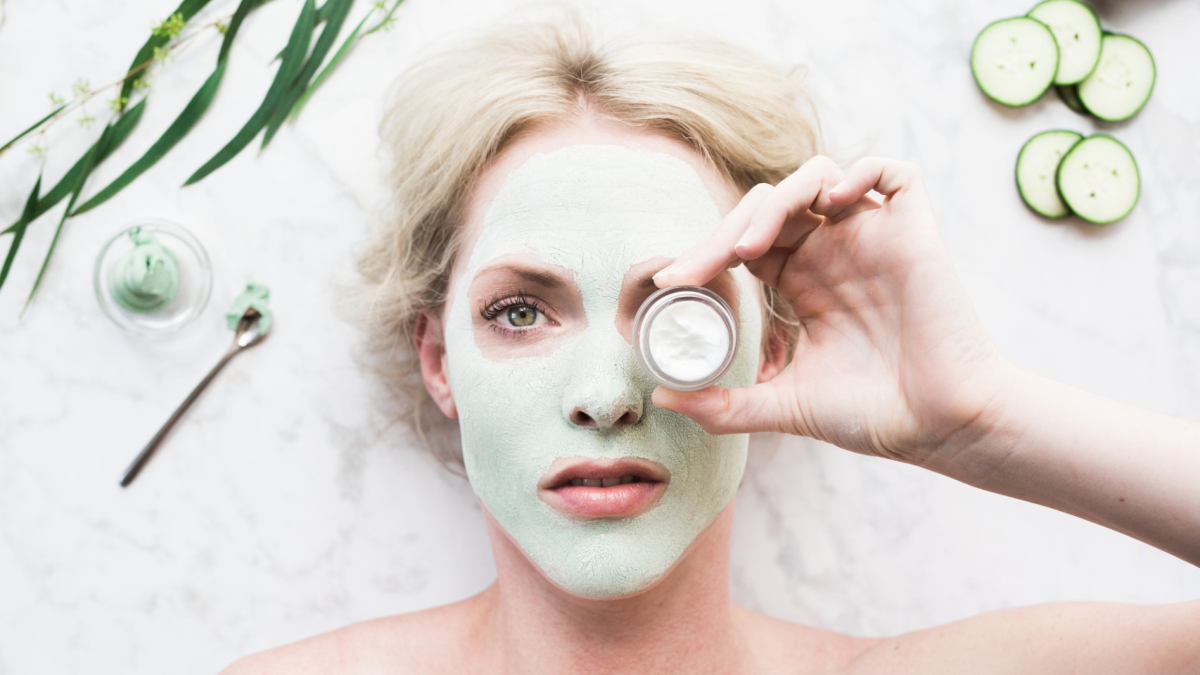
We drank cucumber. We ate cucumber. We put cucumber slices over our eyes while doing breathwork.
And because this was Cold Bums, Warm Hearts, somebody eventually took the cucumber into the ice bath.
Even the cucumber agua fresca ended up in the ice bath.
Not as part of the practice. It was the only sensible place to keep it cold.
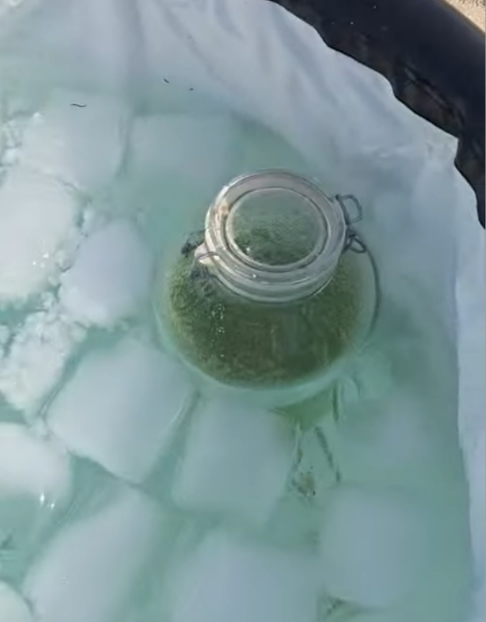
An edible water bottle in a green jacket
A cucumber is about 95% water. Its close relative, the courgette, isn't far behind. I like thinking of cucumber as an edible water bottle in a green jacket and it is my favourite snack in summer.
We tend to think of hydration as something that happens when we drink. Drink two litres... Tick the hydration box...
Our bodies are less interested in where the water came from. Water in food contributes to our total fluid intake too, which is one reason fruit and vegetables can be particularly welcome in hot weather. And our needs aren't fixed. They change with temperature, activity, diet and how much we're sweating.
In Malta in July, the sweating part doesn't generally require explanation.
Sweating is one of the main ways our bodies get rid of excess heat. As sweat evaporates from the skin, it takes heat with it. But you knew that! Of course we also lose water and electrolytes in the process which is why hydration becomes more important when it is scorching outside.
That doesn't mean everyone needs to spend the summer clutching a fluorescent sports drink. For most normal daily activity, food and water do a perfectly good job. If we are sweating heavily for a long time, especially during exercise or prolonged heat exposure, replacing electrolytes, particularly sodium, becomes more important.
And drinking ridiculous amounts of plain water isn't clever either. More isn't automatically better (I already covered that in my previous blog). Hydration is about absorption as much as meeting our needs, not winning a water-drinking competition.
Enter the agua fresca
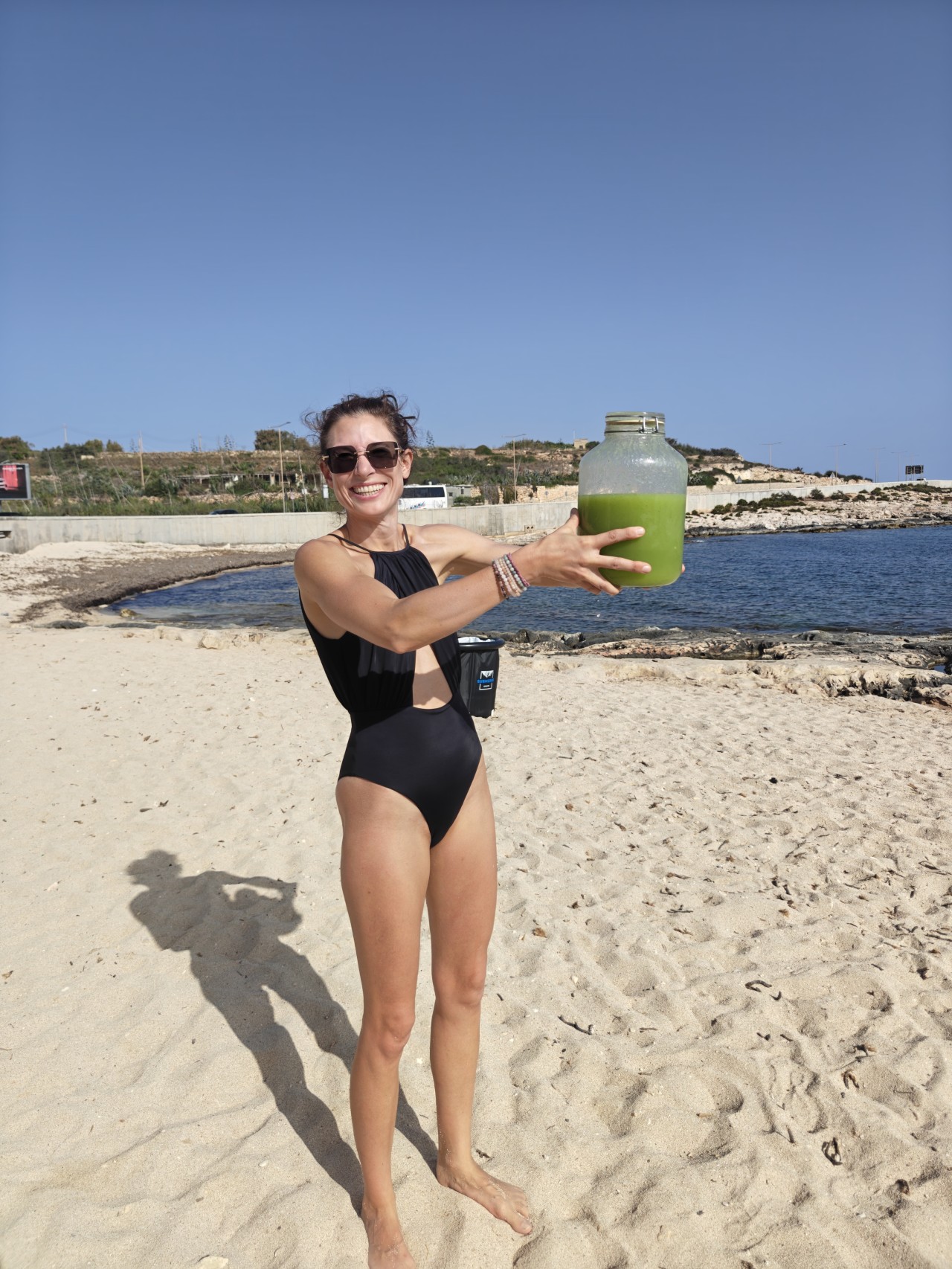
For the meetup I made my own version of cucumber agua fresca made with cucumber, lime, mint, coconut water, salt...
Coconut water contains electrolytes, particularly potassium, which is why it often gets marketed as nature's sports drink. There is some truth surrounded by quite a lot of marketing.
Studies comparing coconut water with water and commercial electrolyte drinks after exercise have generally found that all of them can rehydrate you. A small 2026 trial did find good fluid retention with coconut water after exercise but overall hydration status wasn't that different between the drinks.
Coconut water is often described as a natural electrolyte drink but there's an interesting catch. It's naturally rich in potassium while being relatively low in sodium, one of the main electrolytes we lose in sweat.
In one small study, researchers actually added sodium to fresh coconut water and it performed better for whole-body rehydration.
Which made me look rather differently at the pinch of sea salt I'd added to our cucumber, coconut water, lime and mint agua fresca.
I won't claim we invented a superior sports drink but apparently I was heading in the right direction.
More than anything it was cold, refreshing and delicious.
But surely cucumber is basically just water?
This is where my humble cucumber became more interesting.
Cucumber isn't a nutritional heavyweight if we judge food simply by how many vitamins and minerals we can squeeze into 100 grams. It does provide vitamin K and small amounts of various minerals and vitamins but nobody needs to start calling cucumber the next superfood.
Please don't. It has survived perfectly well without a marketing department.
But a nutrition label doesn't tell us everything contained in a plant.
Researchers have identified a surprisingly varied collection of compounds in cucumber, including cucurbitacins (surely one of the best names in nutritional science) as well as flavonoids such as vitexin and orientin and numerous other plant compounds. Research into their biological activity is interesting, although much of it is laboratory or preclinical work rather than evidence that eating cucumber treats disease.
And I'm fine with that.
A cucumber doesn't have to cure anything to be worth eating.
Don't automatically remove its jacket
And before you reach for the peeler, remember that some of the fibre is in the skin of cucumber and courgette. Peel it and some of the fibre goes with it. It can also remove some of the plant compounds concentrated in the skin.
So if the green jacket is tender and you're happy eating it, wash it well and leave it on.
My edible water bottle can keep it on.
When cucumber needed a cousin
Cucumber loves COLD. It doesn't do as well in heat... Fortunately it has relatives.
Cucumber is Cucumis sativus. Courgette or zucchini is Cucurbita pepo. They're not the same species but both belong to the wonderfully named Cucurbitaceae family along with squashes, pumpkins and melons.
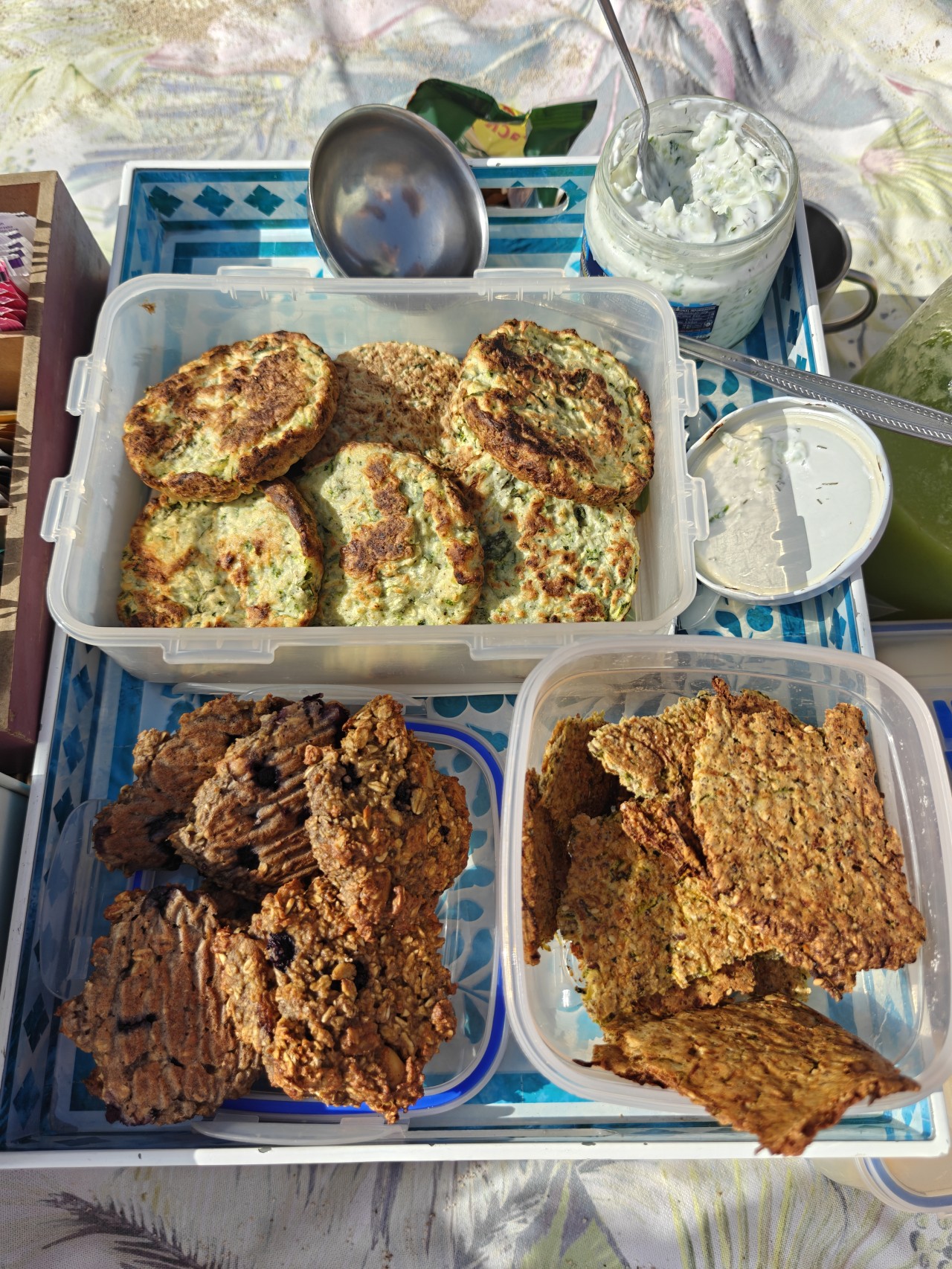
Courgette is also roughly 95% water, but it behaves much better when heated. We had courgette fritters and little Parmesan courgette crackers, with homemade tzatziki to bring cucumber back into the dance.
Want to make them? I've put all the recipes from our cucumber morning here: Cucumber Vibes
We played spa on a Maltese beach
And then things became less nutritional.
We lay down on the sand for our breathwork.
And I handed out cucumber slices.
For our eyes.

I would love to tell you that I had uncovered a magnificent clinical trial proving that cucumber slices over the eyes reverse ageing, eliminate dark circles and make you look ten years younger.
I hadn't.
Cucumber does contain interesting compounds and cucumber-derived ingredients are used in skincare, but evidence for the miraculous effects of two supermarket cucumber slices over your eyes is surprisingly thin.
A cool, moist slice feels soothing on hot skin.
And lying on a beach with your eyes closed, listening to your breath while wearing cucumber goggles is surprisingly difficult to take seriously.
That may have been part of the benefit.
Then came the aloe vera
The aloe actually had a story of its own.
The day before our meetup, I had been at my stall at Barbara O'Neill event at Vincent's Eco Farm.
A stranger had given me a fresh aloe vera leaf the day before because he saw me getting burnt standing by my stall.
I loved that. Such a simple act of noticing another person and offering something that might help. So the following morning the aloe came to the beach with me. I opened the leaf and we used the clear inner gel on our sun-exposed skin.
This one has a little more science behind the tradition. Human studies have found that topical Aloe vera gel can increase skin hydration, although evidence for treating different skin problems varies considerably.
It wasn't there to make the ice bath work better. It was July. We were on a Maltese beach. The sun was already fierce.
We were playing spa.
And somebody else's small act of care the previous day had unexpectedly become part of our morning.
I think I like that story more than any list of aloe's active compounds.
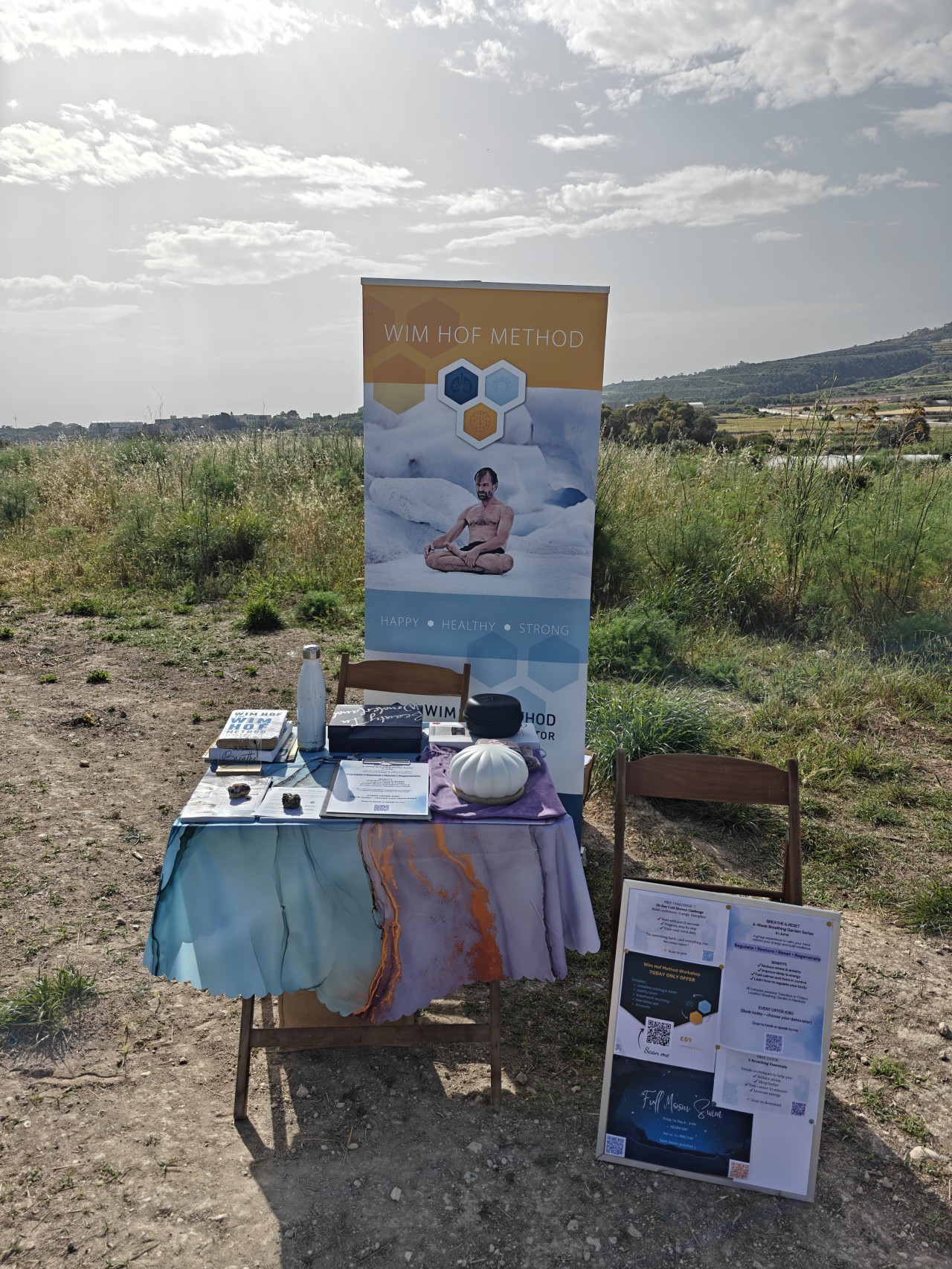
By this stage we had:
drunk it, eaten it, dipped courgette crackers into it, put it over our eyes, used it during breathwork, and eventually taken it into the ice bath.
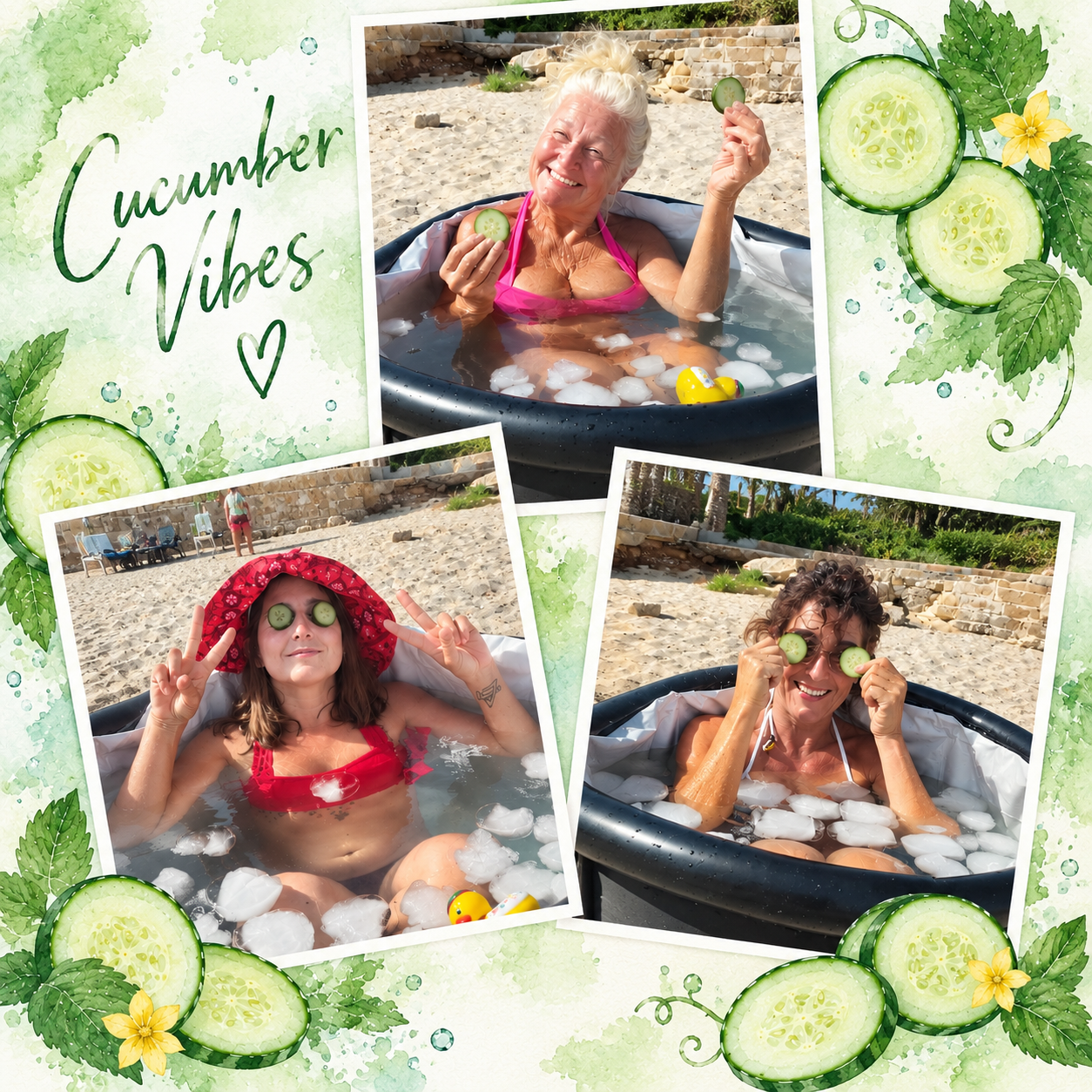
Apparently cucumber is very versatile.
There was plenty of serious physiology underneath all this: hydration, thermoregulation, breathing, food and cold exposure. But nobody had to take themselves terribly seriously while learning about it.
And I've started to wonder whether that matters more than we give it credit for.
Perhaps play was the most interesting ingredient
As adults, we're rather good at making health serious. We track our exercise, macros and Oura scores. We turn breathing into protocols and cold water into something else to measure, optimise and endure.
We can even reduce a cucumber to 15 calories, 95 grams of water and however many micrograms of vitamin K.
All useful information.
But what happens when we add curiosity?
Researchers have repeatedly found that when people are genuinely curious about information, they're more likely to remember it. A 2026 meta-analysis combining 47 independent studies found better recall for information people were curious about, with a smaller spillover effect on other information encountered around the same time.
And this doesn't appear to belong only to young brains. Experiments involving adults aged 65–89 have found better recall for answers to questions that generated greater curiosity. Other studies suggest curiosity-related memory effects remain relevant across adulthood.
Playfulness is interesting too. It's much harder to study than hydration or nutrients, but research in adults has associated greater playfulness with differences in perceived stress and coping. That doesn't prove playing with cucumbers makes you resilient. It does suggest that our ability to reframe an ordinary situation as something interesting or amusing may be more than childish nonsense.
I hope so.
Because we were very good at childish nonsense that morning.
The extraordinary cucumber
I don't think cucumber needs rebranding as the next superfood. I rather like it as it is: cheap, ordinary, mostly water and available in almost every supermarket.
What made that July morning memorable wasn't discovering that cucumber was secretly extraordinary. We simply became curious about something we normally barely notice.
What else could we do with it?
Apparently quite a lot.
Breakfast, a drink, an eye mask, a science lesson and, eventually, ice-bath equipment.
And the ice bath?
For once I can make a claim about it with absolute confidence.
It kept the agua fresca beautifully cold.
Join us...
Categories: : Breathwork & Meditation, Cold exposure, Malta, Recipes
Enjoyed this? Stay curious with me.
Occasional thoughts on breathing, resilience, health, cold and the interesting things I discover along the way.
Plus first notice of workshops and community events.
