The Magnificent Seven
 Pavla Borg

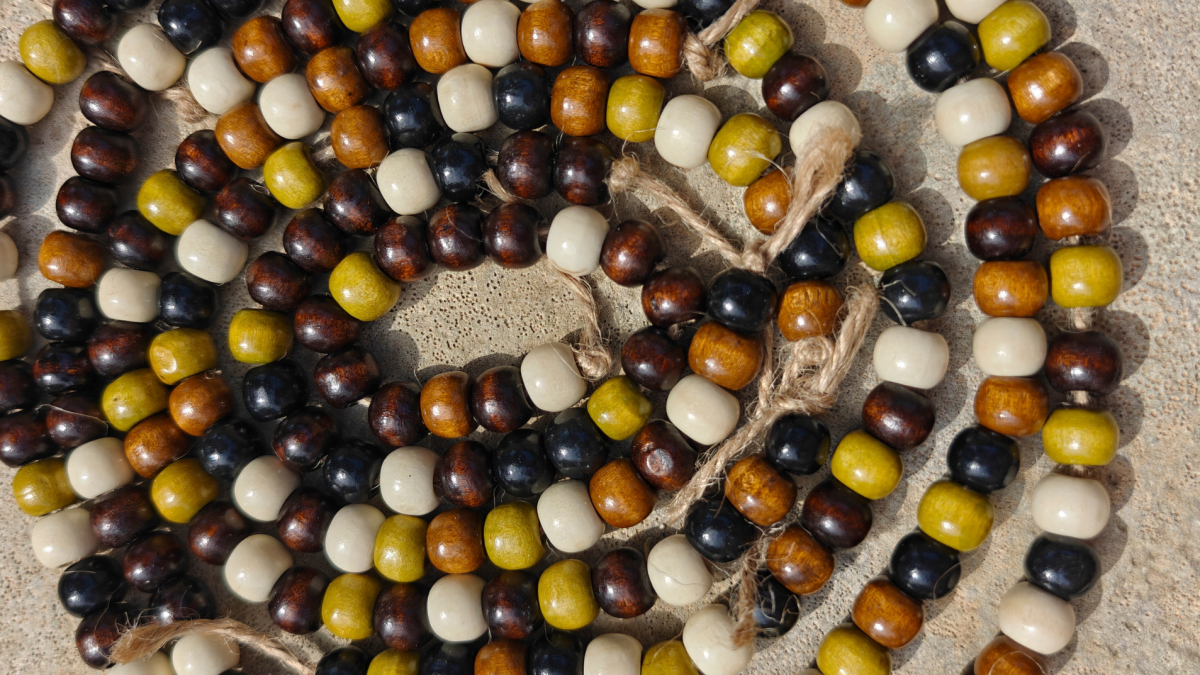
What can nuts, maths, breathing and an ice bath teach us about keeping a sharp mind?
On Sunday the magnificent seven turned up for our September Cold Bums, Sharp Minds meetup.
I say the magnificent seven because firstly... I just love that film... but also because seven turned out to be quite an appropriate number for what I had planned!

September brings back-to-school vibes, memories and impressions that stay with us for life. What we enjoyed and what we were good at and what limitations we adopted. Often the one subject least missed was my favourite one. Can you guess?
In an age that we are increasingly outsourcing not only counting (calculators) or reading (internet) but even our own thinking (AI), I wanted to play a little with the idea of keeping our minds sharp. Not in a serious brain optimisation kind of way but more through curiosity, games, breathing, food and a little cold water.
Let’s start with food. Or rather, with a guessing game about food.
My Ingredient of the Month was hidden inside a few clues. Try to guess:
It is one of the oldest tree foods eaten by humans.
It can take a good seven years to get edible produce.
It is green on the outside and peeling it can stain your hands for days to come. No wonder it has long been used as a dye.
The tree produces juglone, its own chemical warfare that can inhibit the growth of some plants around it.
Its Latin name, Juglans, comes from Jovis glans, meaning Jupiter's nut.
It contains more ALA omega-3 than most other common nuts but it’s not even botanically classified as a nut.
And the wood makes highly priced furniture.
And, rather conveniently for a Sharp Minds meetup, it looks like a tiny brain.
You probably guessed it by now! The walnut.
There is something magnificent about that resemblance, although sadly nature did not design walnuts in the shape of brains as nutritional instructions for humans. (And no, kidney beans aren't nutritional instructions for your kidneys either! 😊)
Still, walnuts are interesting. They provide ALA, an essential plant omega-3 fatty acid, along with polyphenols, fibre and other nutrients. The strongest evidence for walnuts is probably cardiovascular rather than eat walnuts and become smart but what supports the heart and circulation matters to the brain, too.
And that is where I think brain health already becomes more interesting than a list of superfoods. Our brain is not sitting upstairs operating independently from the rest of us.
It is extraordinarily demanding tissue. Although it makes up only a small proportion of body weight, it uses a large share of our energy and oxygen (try to guess in the quiz below!).
The systems involved in feeding neurons, producing energy, maintaining blood flow and helping brain cells adapt are connected. That means the neat little boxes we make... exercise over here, food over there, learning somewhere else... don’t really support separate systems. Movement, metabolism and learning meet each other biologically.
Which made me want to stop talking about brains and actually use ours. And not just use it but have fun with it... play like the kids many will soon send off to school.
I am an empty nester, my children are both grown up, but I still remember the fun having them around. Children can turn almost anything into play whilst adults can turn almost anything into an assessment. So before you do the same, remember this quote often attributed to Eckhart Tolle:
“Children don’t get joy out of what they are doing but put joy into whatever they are doing.”
The game was simple.
We sat in a circle and started counting. We counted upwards, except that every number divisible by seven or containing the digit seven, had to be replaced with the word: ICE.
1, 2, 3, 4, 5, 6, ICE, 8...
Get it wrong and you earned ten squats or five push-ups.
There was no pressure, nobody was grading anyone... Nobody’s career or reputation depended on remembering whether 105 was divisible by seven. At worst you would go home with slightly stronger legs. Or arms :)
And yet the moment I introduced maths, I could see a reaction in some people, a sense of unease on a Sunday morning. Someone reached for a calculator on their phone.
That interested me far more than whether anybody got the answer right because the game itself was harmless. What arrived with it was everything maths may have meant years ago. Getting things wrong. Being told you were not a maths person. Feeling embarrassed while somebody waited for your answer. Judging yourself...
And that made me wonder how often we respond not only to what is happening now but to what our brain has learnt to expect from something that happened long ago.
But there is another piece to this. Acute stress can make some kinds of thinking harder. Working memory, flexible thinking and top-down control can all become less reliable as stress rises. Our supersonic Amy, my name for the amygdala, becomes increasingly alert to possible threat while the more deliberate work of the prefrontal cortex becomes harder to access. Dr Alan Watkins uses a rather memorable description for what this can feel like: performing our own DIY lobotomy.
Which creates a rather annoying loop. You worry that you won’t be able to think clearly. That anxiety makes clear thinking harder. Then the difficulty feels like proof that you really are bad at it. So perhaps keeping a sharp mind is not simply about thinking better but more about what happens to our thinking when a little pressure arrives.
So after all that mathematical excitement, I reduced the challenge considerably. From seven, we went down to three.
We practised the 3:3 Sleep Method, a very simple breathing practice. Breathe in gently for three through your nose, breathe out for three through your mouth in a specific way. No breath holds, very little effort and even less counting. It is designed to help settle an overstimulated nervous system when sleep feels out of reach. I think of it as a switch, which seems a rather appropriate name for something you can use when your brain refuses to switch off.
Because when we talk about brain health, sleep deserves a very prominent place in the conversation. Attention, memory, learning and emotional regulation all suffer when we repeatedly cut it short.
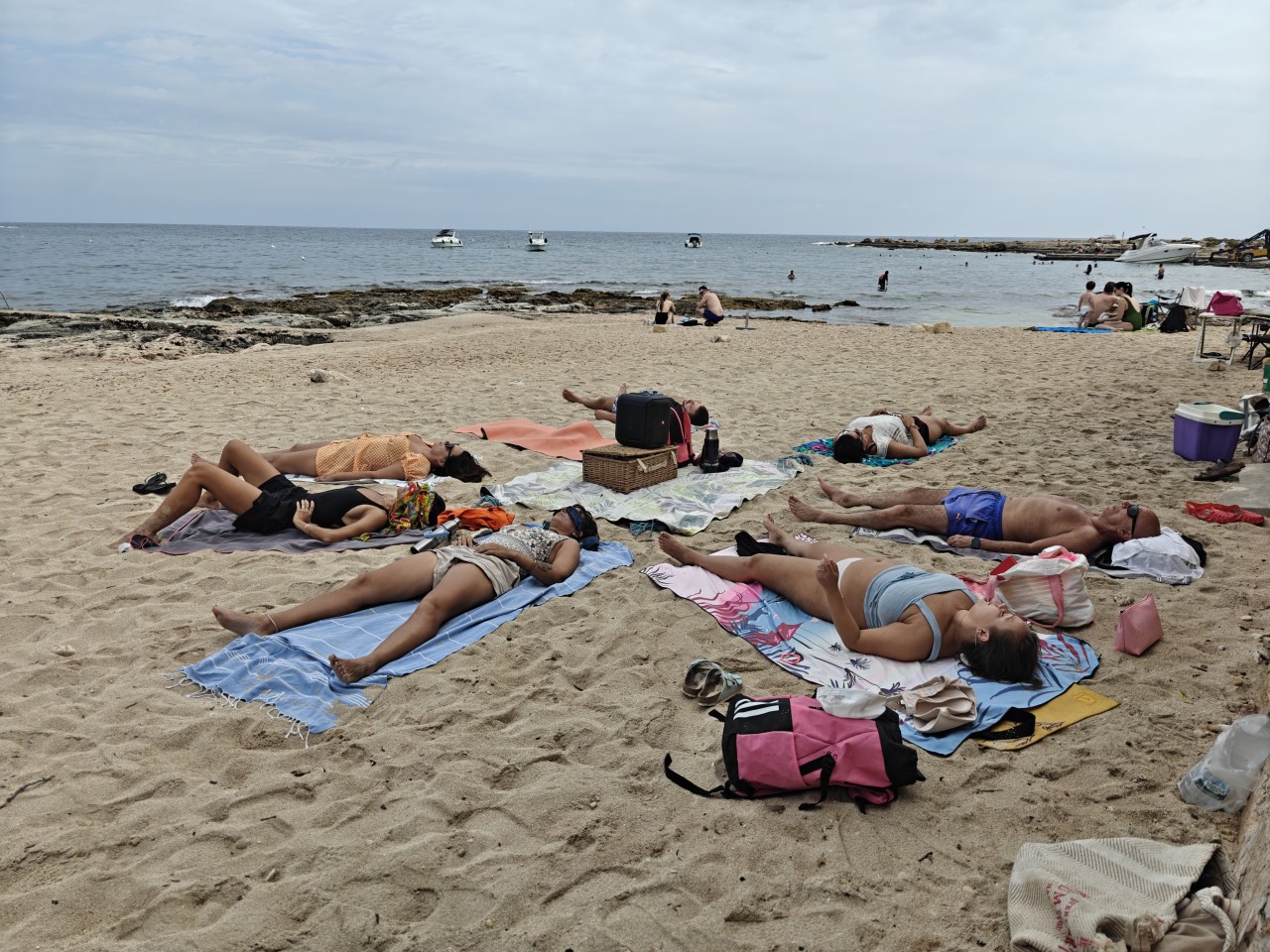
Three was also rather conveniently one digit away from thirty which brings me to what came next. For our Wim Hof Method breathing we usually work with around thirty breaths before the breath hold. The problem is that counting your own breaths can keep part of your attention busy doing exactly what you are trying to move away from.
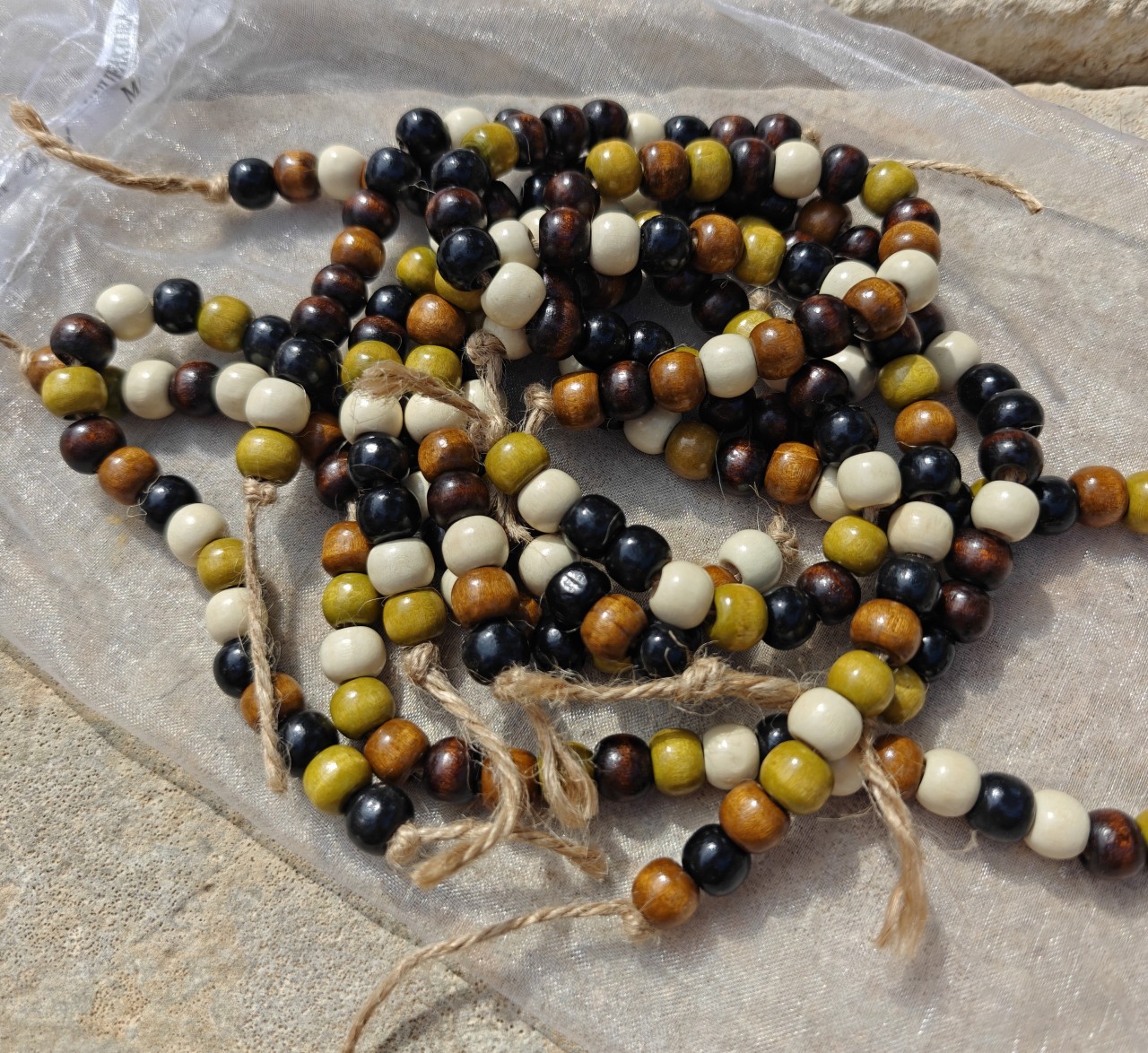
So I made everyone a string of thirty wooden beads.
One breath, one bead.
This time the string did the counting so our attention could stay with the breathing. There was no need to think and no need to adopt someone else's breathing rhythm. Each person could breathe at their own pace and simply move to the next bead.
It was such a simple change but everyone loved it.
From seven, to three, to thirty. Apparently I managed to turn a breathwork morning into maths after all.
Back to the ICE
I also wanted to test our sense of time in the cold water. The challenge was to tune in and guess when two minutes had passed. Anyone who has spent time in very cold water knows that time can become rather elastic.
Cold and the brain have a fascinating relationship. In medicine, carefully controlled cooling is actually used to protect the brain in some very specific circumstances. Therapeutic hypothermia is now established treatment for certain newborn babies who have experienced oxygen deprivation around birth. Their body temperature is carefully lowered to around 33.5°C for 72 hours to reduce the risk of further brain injury. Cooling has also been investigated as a neuroprotective treatment after stroke, although here the evidence has not established it as routine treatment.
Of course, that is very different from sitting in an ice bath on a Sunday morning.
Thomas Seager, PhD, co-founder of Morozko Forge, has also done some interesting experiments with brain activity in the ice. Using a Muse EEG headset, he has measured brain-wave activity during freezing-water immersion and reports patterns characteristic of a deeply calm, meditative state. He has seen similar patterns in several people, although this is his own exploratory work rather than a controlled peer-reviewed trial.
I find that fascinating because it sounds quite similar to what many of us actually experience in the ice. At first a minute can feel eternally long. Then something settles. Attention narrows and our perception of time can change. That made me curious. What happens when we stop looking at a clock and have to rely on what we notice from inside?
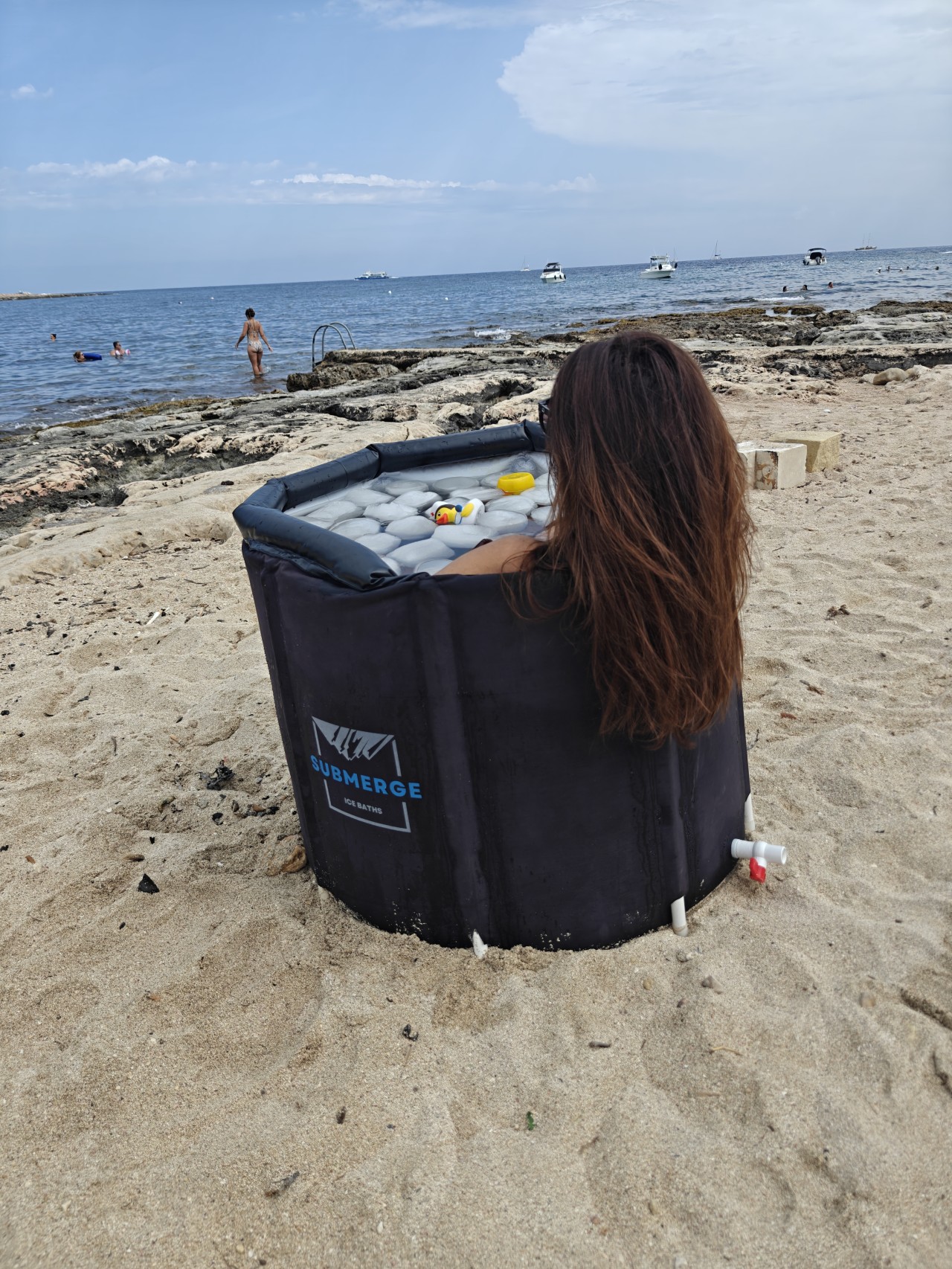
This is one of the things I still enjoy about cold exposure. Not proving toughness or staying in longer than everyone else. And definitely not making life hard for the sake of it. Life manages that perfectly well by itself.
I like having a safe situation where something slightly uncomfortable happens and we can watch what the mind does with it. And then get out, laugh, wrap ourselves in towels and eat.
Which brings me back to food. Healthy, whole food, packed with brain friendly ingredients... Before we tucked in, I shared a line from psychiatrist Daniel Amen that in my opinion summarises healthy eating:
“Love the food that loves you back.”
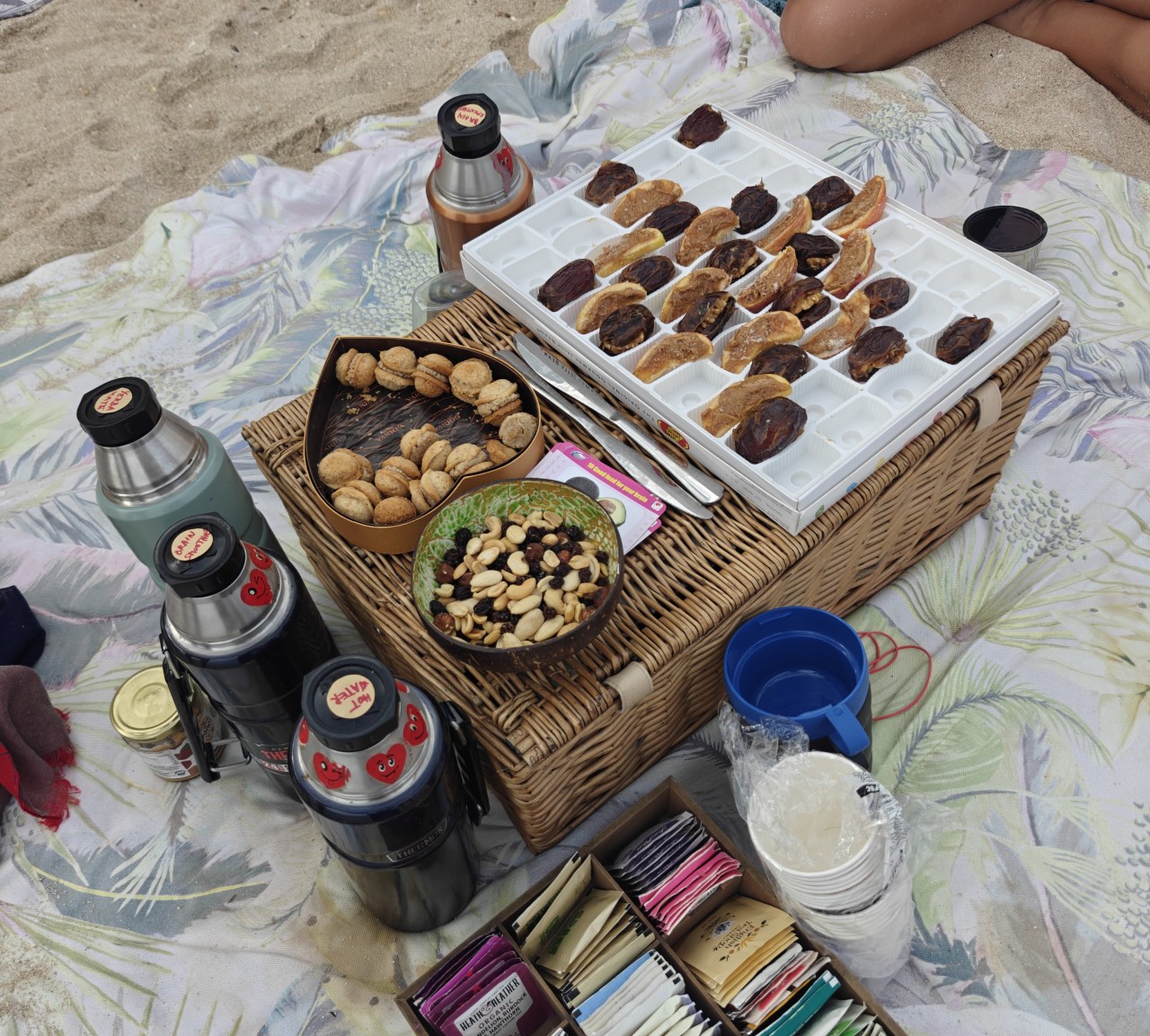
Food certainly loved us back that morning. You can find all the recipes here:
A Handful of Walnuts
Neuroscientist Fernando Gómez-Pinilla looked at how nutrients can affect neuronal function, energy metabolism and synaptic plasticity. One of the most fascinating points is that feeding involves far more than nutrients arriving in the bloodstream. Signals from the gut, hormones, energy metabolism and brain activity are constantly talking to each other.
Uma Naidoo’s nutritional psychiatry work also puts considerable emphasis on sleep, movement and social connection rather than relying on one heroic ingredient. Food is nutrients, certainly. It is also pleasure, ritual, culture, colour, texture and connection.
So, in keeping with today's theme, here are seven DOs and seven DON'Ts for looking after your brain.
DO
1. Move.
Exercise is not only good for the heart. Movement influences signalling involved in brain plasticity and there is fascinating research into the relationship between exercise, energy metabolism and BDNF, a protein involved in learning and synaptic plasticity.
2. Protect your sleep.
Attention, working memory, learning and emotional regulation are all affected by insufficient sleep. Sleep is not wasted time. Your brain gets busy while you are unconscious.
3. Eat real food and plenty of different plants.
Leafy greens, colourful vegetables, berries, legumes, nuts, seeds, herbs and spices all provide a different mix of nutrients and plant compounds. Include good-quality protein and sources of omega-3 fats.
4. Keep learning.
Not only things you are already good at. Learn something challenging enough that your brain actually has to work. A language, a dance, a musical instrument or just take a different route home.
Or learn the seven-times table :) Apparently!
5. Practise calming down while you are already calm.
Breathing and relaxation practices are much easier to access under pressure when they are already familiar. Don't wait until you are overwhelmed to learn the tools for the first time.
6. Look after your heart and metabolism.
Your brain depends on a constant supply of blood, oxygen and energy. Looking after your blood pressure, glucose regulation, cardiovascular fitness and metabolic health means looking after your brain too.
7. Stay connected. And play.
Eat together. Walk together. Learn together. Laugh. Ask for help. Be silly occasionally. Human brains seem to do rather well in the company of other human brains.
And play deserves to stay on the list even if nobody ever produces a supplement called PlayMax 7000. Remember the quote about joy?
DON'T
1. Don't expect one superfood to save your brain.
Walnuts are wonderful. So are blueberries. Neither is an insurance policy against cognitive decline.
2. Don't mistake supplements for the foundations.
Correcting a deficiency is one thing. Using supplements to compensate for poor sleep, inactivity, smoking, excess alcohol, poor metabolic health and an ultra-processed diet is another.
3. Don't smoke.
There are not many brain-health recommendations simpler than this one.
4. Don't treat alcohol as health food.
The resveratrol-in-red-wine story has probably done rather a lot of marketing work for wine. If you want grapes, you can eat grapes.
5. Don't confuse being busy with using your brain well.
Having seventeen tabs open is not necessarily cognitive training. Sometimes it is just seventeen tabs open.
6. Don't protect yourself from ever being a beginner.
Getting things wrong is part of learning. So is feeling temporarily incompetent at something new. That includes maths games.
7. Don't turn brain health into another source of stress.
You do not need to optimise every molecule before breakfast.
So what does “sharp” actually mean?
I started the morning thinking about keeping our brains active. By the end I was thinking about something slightly different. I don't particularly want a brain that can merely collect more information.
Google can already beat me at that.
And AI certainly can.
I want one that can still learn, think critically and change its mind. Stay curious. Notice when an old reaction has arrived before automatically believing it. Think reasonably well when things become uncomfortable. Know when to work harder and when to remove unnecessary noise. And still be capable of playing and put joy into whatever I am doing.
If good food, sleep, movement, breath, learning, friendship and the occasional ice bath help me keep more of that as I get older, I am quite happy to do the homework.
Join us...
QUIZ
And because it is September, you don't get to leave without a test.
Ten questions, no calculator. Unlike Sunday, there are no squats for getting one wrong.
Categories: : Breathwork & Meditation, Wim Hof Method
Cold Bums, Sharp Minds Quiz
10 questions. No calculator. And unlike Sunday, no squats if you get one wrong.
Enjoyed this? Stay curious with me.
Occasional thoughts on breathing, resilience, health, cold and the interesting things I discover along the way.
Plus first notice of workshops and community events.
